
 Finish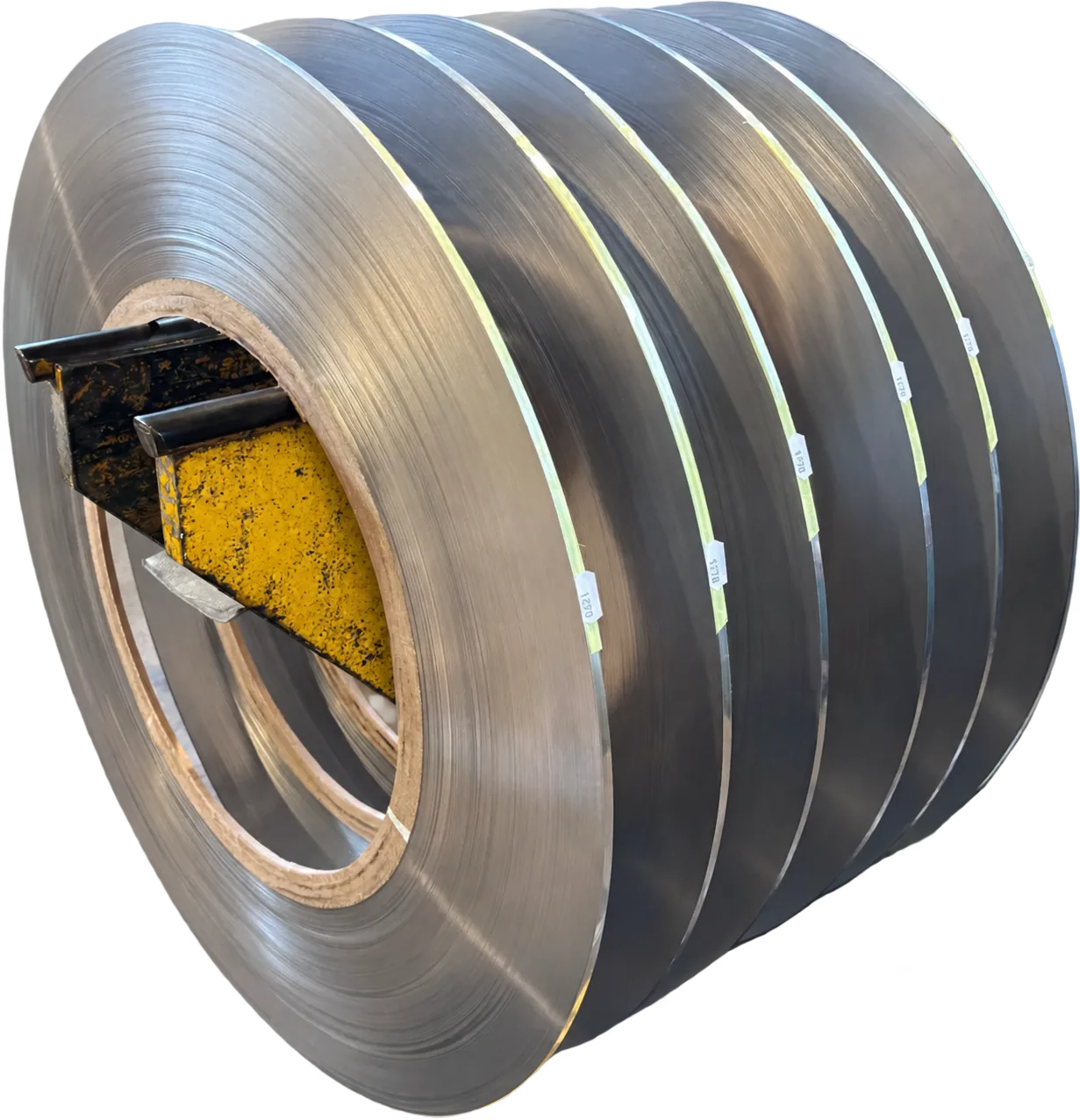
Format
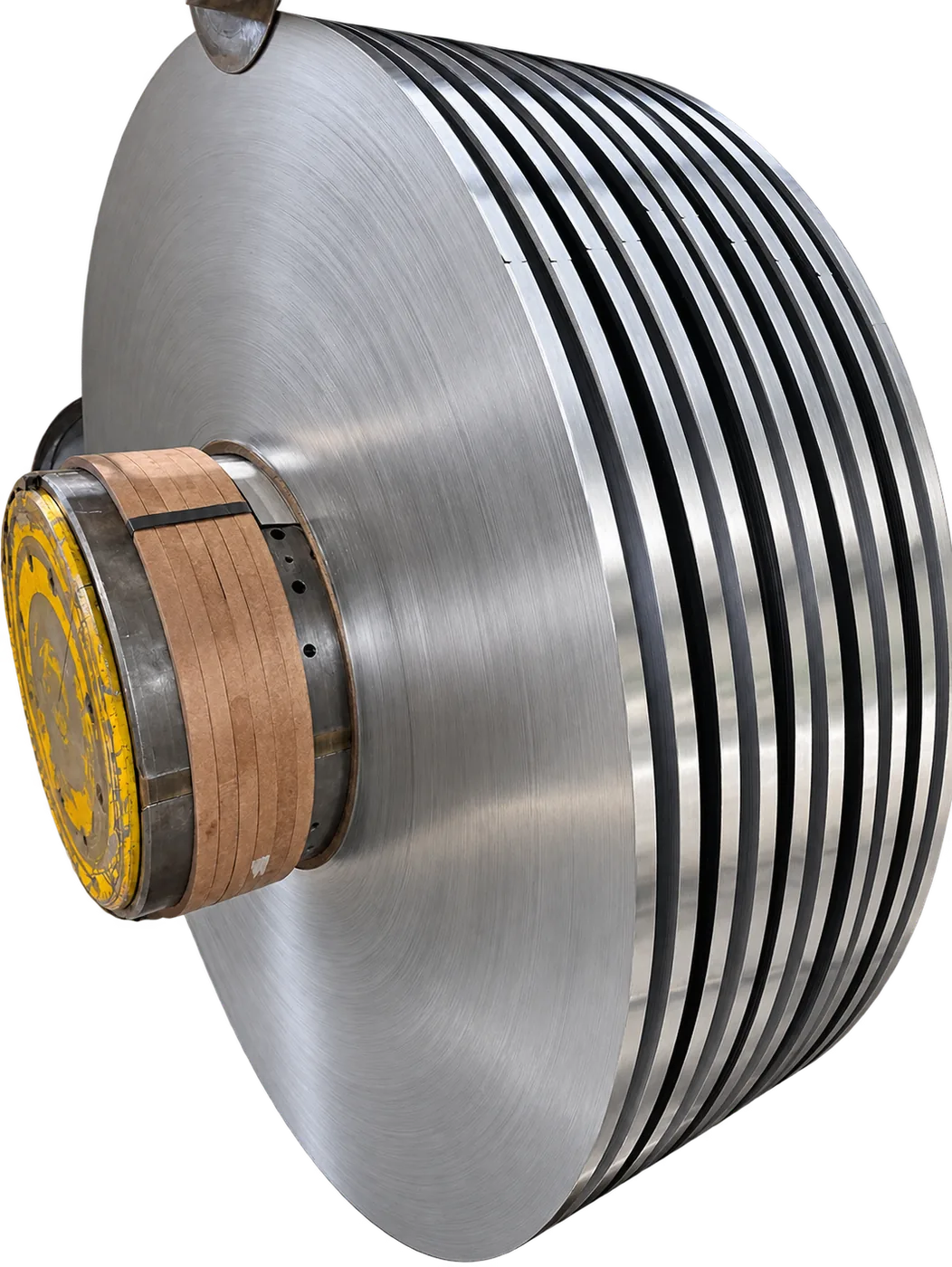
Narrow strips
Narrow, thin strips starting from 3 mm wide: dimensional precision, edge quality and stability on the line. Suited to processes that do not need continuous feeding.
Flexibility and expertise in precision strip.
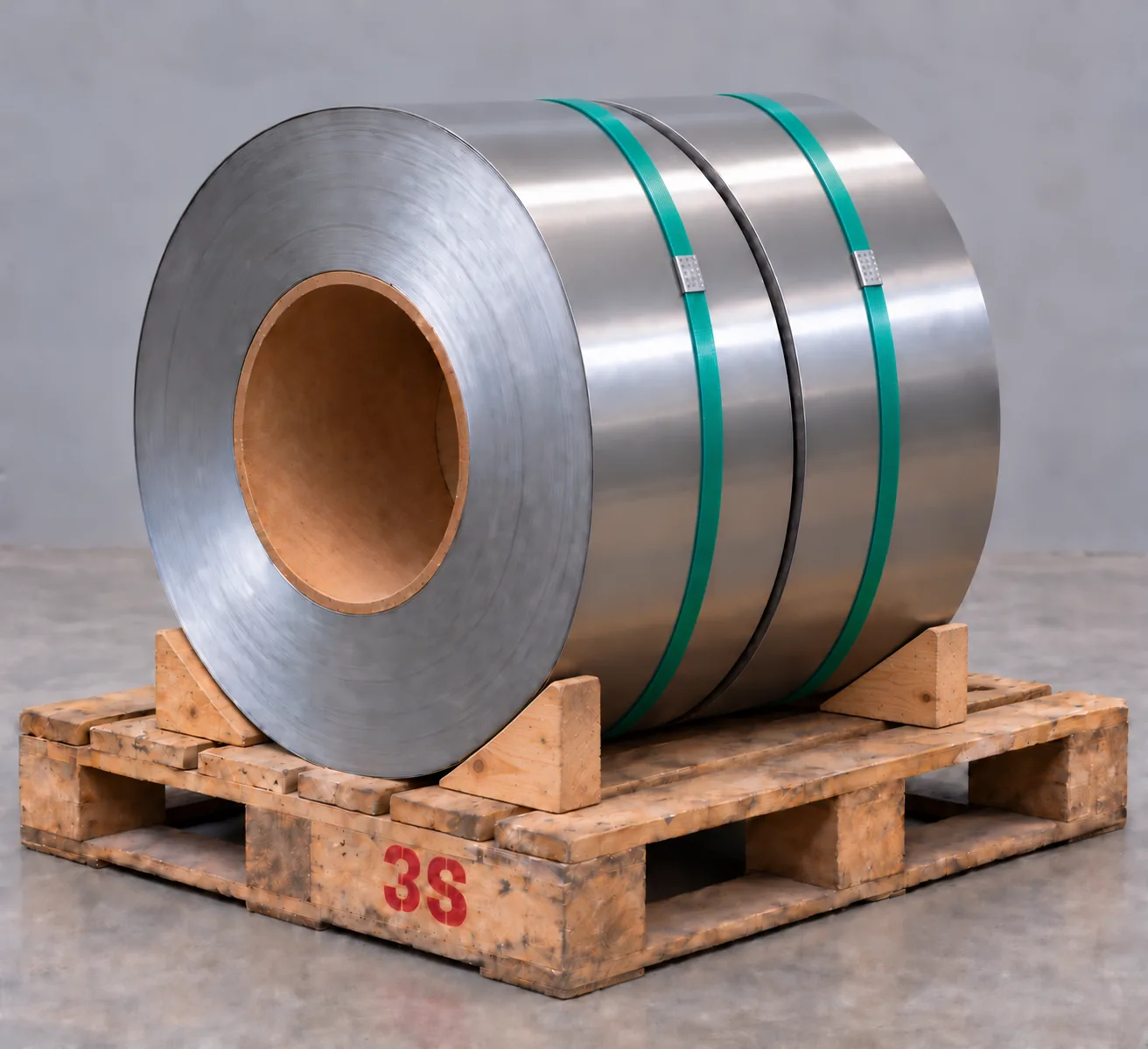
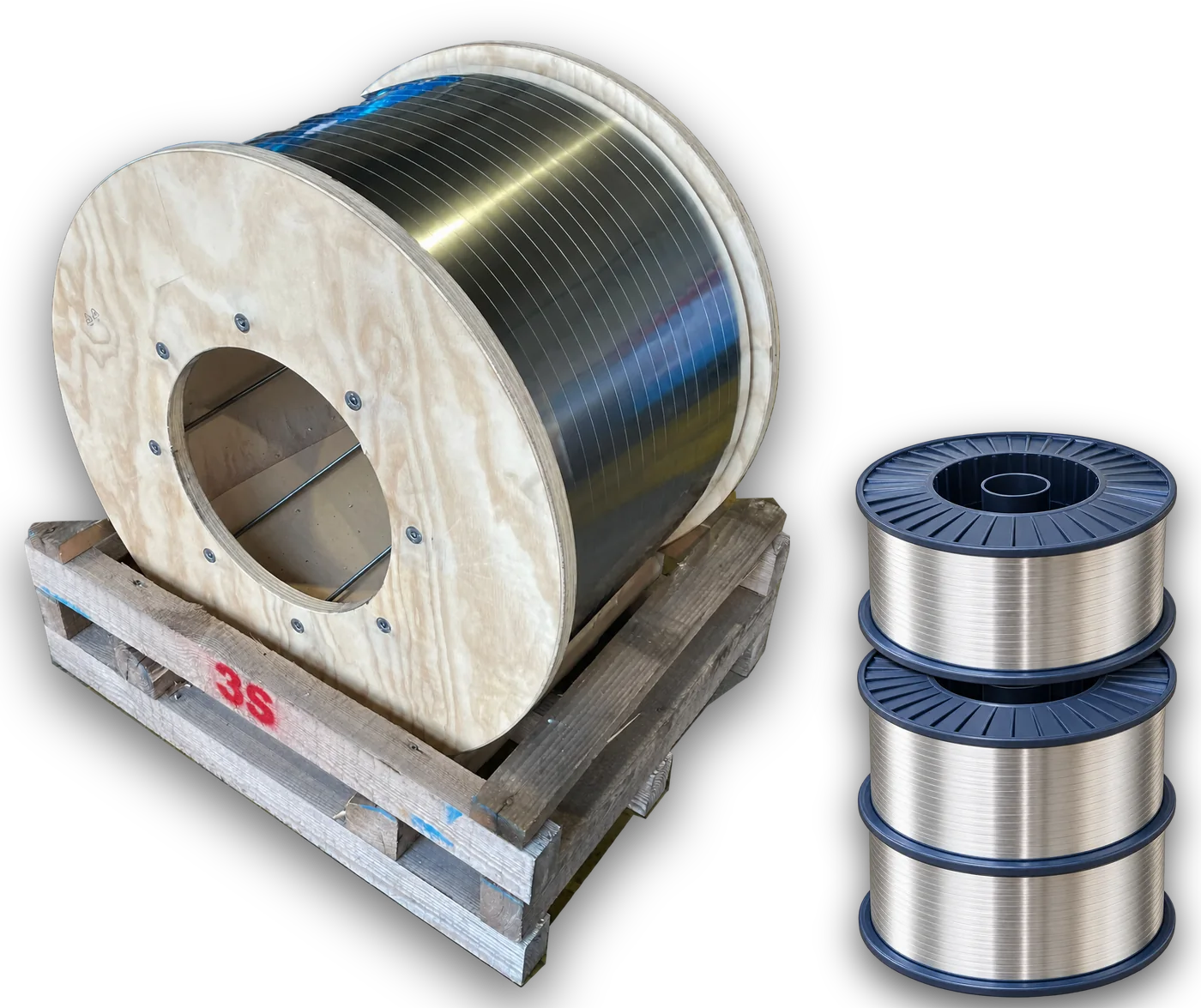
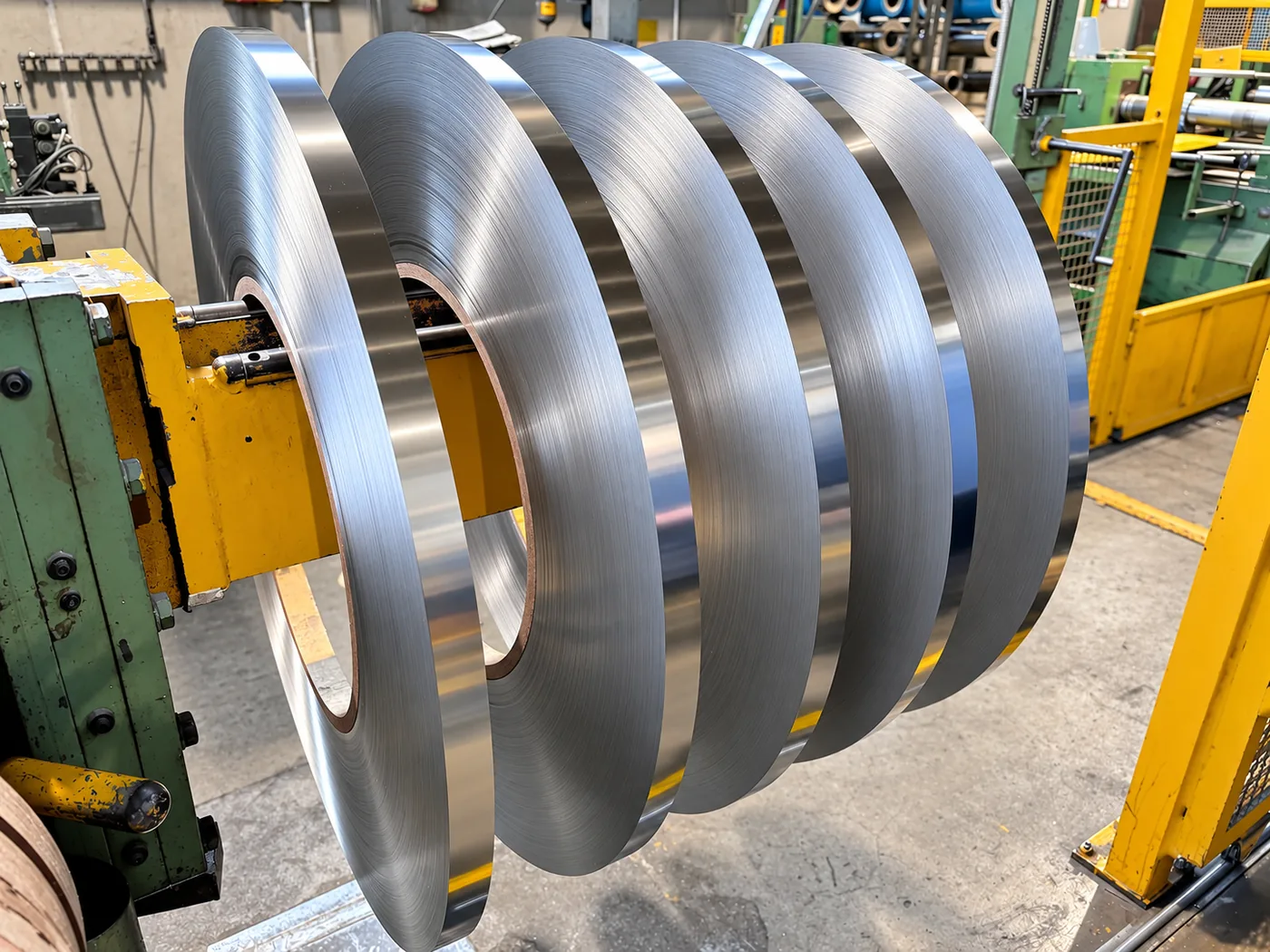
We produce precision stainless steel strip, stainless steel coils, slit strip, narrow strips and stainless steel spools (strip on reels) for automated lines. We supply formats and finishes (2R/BA, 2H) with tight tolerances for demanding industrial applications. Thin and extra-thin cold-rolled strip from 0.05 mm, AISI 301 up to strength class C1900, no minimum order.
coils • slit strip • narrow strips • spools (strip on reels)
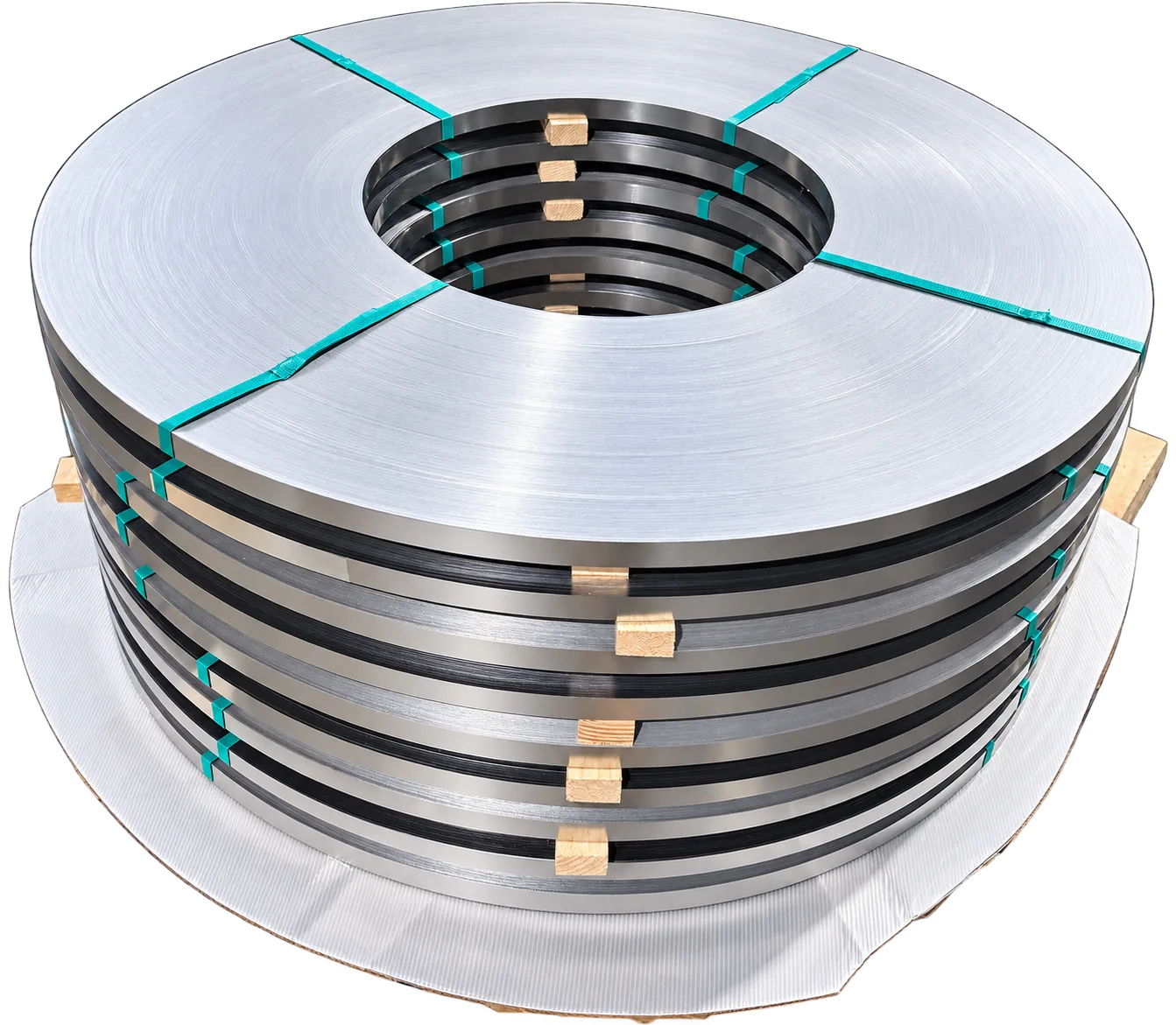
precision stainless steel strip • stainless steel coils • stainless steel strip • stainless steel narrow strips • stainless steel spools on reels
3S S.r.l. specialises in precision stainless steel strip and builds its strengths, such as flexibility and industry expertise, on a strong integration between its Italian site in Assago (MI) and its industrial partner in Germany, R. Kretzschmann GmbH
2 production sites: Germany (Birkenfeld) and Italy (Assago)
Extensive sourcing and qualified selection of raw materials
Dedicated solutions and fast response times
| Parameter | Capability | Notes |
|---|---|---|
| Thickness | Annealed 0.05 – 0.70 mm Work-hardened 0.05 – 2.50 mm | Thin and extra-thin strip · Other thicknesses on request |
| Width | 3 – 1250 mm | Slitting with sheared or deburred edges |
| Finishes | Annealed 2R / BA • Work‑hardened 2H | Calibrated mechanical properties |
| Formats | Strip • Narrow strips • Spools • Sheets | Sheets cut to size up to 1000 mm |
| Mother coils | Up to 6–8 kg/mm | ID 300/400/500 mm |
| Spools | From 15 kg to 1500 kg | ID 50–400 mm • traverse or parallel winding |
Alloy range: wide stock of austenitic and ferritic grades; nickel and titanium alloys on request.
| Grade | Type | Properties | Typical applications |
|---|---|---|---|
| AISI 2011.4372 · X12CrMnNiN17-7-5 | Manganese austenitic | Less nickel than 304, high mechanical strength, good formability | Window spacers, flue liners, housewares |
| Austenitic 1% Ni (200 series, type J4)200 series · type J4 | Cr-Mn-Cu austenitic | About 1% nickel: the most economical austenitic, annealed or work-hardened | Springs, flue liners, spools and large reels |
| AISI 3011.4310 · X10CrNi18-8 | Austenitic | Good formability, work‑hardenable; high strength in 2H condition | Springs, clips, shielding |
| AISI 3041.4301 · X5CrNi18-10 | Austenitic | All‑purpose, excellent corrosion resistance | Household appliances, industrial strip |
| AISI 304PS304 variant | Austenitic | 304 variant with higher elongation, suited to stamping | Stamped and bent parts |
| AISI 304L1.4306 · X2CrNi19-11 | Low‑carbon austenitic | Low carbon: no sensitisation after welding | Welded structures and components |
| AISI 3051.4303 · X4CrNi18-12 | Austenitic | Excellent formability, very low work‑hardening, high ductility | Electronics, automotive, kitchen utensils, deep drawing |
| AISI 3091.4828 | Austenitic | Oxidation and heat resistance (≈ 1035–1100°C) | Furnace parts, heat exchangers, high‑temperature parts |
| AISI 309S1.4833 · X6CrNi23-14 | High‑chromium austenitic | Chromium 21–23%, nickel 12–15%: excellent high‑temperature performance | Furnaces, burners, thermal plants |
| AISI 310S1.4845 · X6CrNi25-20 | High chromium‑nickel austenitic | The most highly alloyed of the series: maximum resistance to hot oxidation | Industrial furnaces, heat treatment, exhausts |
| AISI 3161.4401 · X5CrNiMo17-12-2 | Molybdenum austenitic | Mo 2–2.5%: better resistance to corrosion and chlorides | Chemical, food, marine environments |
| AISI 316L1.4404 · X2CrNiMo17-12-2 | Austenitic | High resistance in chlorides; low carbon for welding | Chemical, marine, non‑implantable medical |
| AISI 316L Mo+1.4435 · X2CrNiMo18-14-3 | Molybdenum austenitic | Higher molybdenum (2.5–3%): the highest corrosion resistance in the 316 family | Pharmaceutical, medical, aggressive environments |
| AISI 316Ti1.4571 · X6CrNiMoTi17-12-2 | Ti‑stabilised austenitic | Stabilised 316, excellent resistance to intergranular corrosion | Welded tanks/piping, hot‑process plants |
| AISI 3211.4541 · X6CrNiTi18-10 | Ti‑stabilised austenitic | Temperature resistance | Exhausts, thermal applications |
| AISI 904L1.4539 · X1NiCrMoCu25-20-5 | Super‑austenitic | High nickel, molybdenum and copper: resists acids and pitting corrosion | Chemical, sulphuric acid, heat exchangers, marine environments |
| AISI 4301.4016 · X6Cr17 | Ferritic | Economical, magnetic; available annealed or work‑hardened | Decorative, internal components, household appliances |
| AISI 4411.4509 · X2CrTiNb18 | Ti-Nb stabilised ferritic | High-temperature oxidation resistance, good weldability, nickel-free | Exhaust systems and heat shields, high-temperature components |
| AISI 410S1.4000 · X6Cr13 | Ferritic | Chromium 12–13%, magnetic, good workability | Mechanical components, mildly aggressive environments |
Other alloys and tempers on request.
Two supply formats for two ways of working: choose the one that best suits your line.
Narrow, thin strips starting from 3 mm wide: dimensional precision, edge quality and stability on the line. Suited to processes that do not need continuous feeding.
Strip rewound on a reel for automated lines: stable pay‑off, more usable length and less machine downtime.
Material certificates (e.g. 3.1) and process certifications (e.g. ISO 9001) on request.
100% dimensional inspection of critical parameters (thickness, width, edges).
Supply compliant with EN/ASTM specifications and specific industry requirements.
Packaging with protective films and separators where needed.
Click an application to see what it is, where it is used and what matters in the strip.
Click a sector to discover the applications of precision strip.
Everything you need to know about coils, strip, narrow strips and spools.
Request a quoteFrom our site in Assago and our production partner in Birkenfeld we ship our strip across Italy, throughout the European Union and to non‑EU countries.
Flexibility and expertise in precision strip.
Tell us the alloy, thickness, width, finish, edge and format (coil / strip / liner / spool). We will reply promptly.
Stainless steel strip springs store and release elastic energy. Strip is used to make flat springs, leaf springs, spring washers, retaining rings and spiral springs, which must retain their return force over time and resist corrosion.
Small stamped and bent components that must grip or ensure constant contact: fastening clips, retaining clips, earthing blades and contact springs. The strip must bend without cracking and retain its force over time.
Terminals and contacts produced by high-speed progressive stamping. Precision strip ensures consistent dimensions part after part and a clean surface for any subsequent plating.
Contact springs, tabs and plates that connect the cells and carry current in battery compartments and battery packs. Elasticity, corrosion resistance and dimensional stability are required.
Covers, cans and fingers that protect circuits and equipment from electromagnetic and radio-frequency interference. They are stamped and drawn from thin strip and often mounted directly on circuit boards.
In spiral-wound gaskets a profiled stainless steel strip is wound in a spiral together with a filler material, producing a seal that withstands high pressures and temperatures. Stainless strip is also used for reinforcing rings and flat metal gaskets.
Stainless strip is used for sheaths, fins, supports and foils in heating elements, where oxidation resistance and stability at high temperature are needed.
The strip is continuously formed and welded, or profiled and spirally interlocked, to produce flexible and corrugated hoses. They carry gas, water, steam, flue gases and industrial fluids, where flexibility and tightness must go together.
Flexible chimney liners are interlocked or corrugated stainless steel pipes inserted into chimneys to exhaust flue gases from boilers and stoves. The strip must withstand acidic condensate and flue gas temperatures.
The spacer keeps the panes of an insulating glass unit apart and holds the desiccant. Profiles made from thin stainless strip reduce thermal bridging compared with conventional profiles and improve the insulation of the window.
Hose clamps secure hoses and sleeves onto fittings and hose barbs. The strip is blanked, punched and bent: it must be strong, must not rust and must not cut into the hose.
In plate and brazed plate heat exchangers the strip is pressed into corrugated plates that separate the fluids. It is also used for fins and louvres. Uniform thickness and corrosion resistance are what matter.
Progressive stamping turns strip into finished parts with every press stroke. Strip with consistent thickness, width and mechanical properties reduces scrap, adjustments and tool wear.
Blades for cutting paper, film, food and textiles, thin blades and cutlery. Flatness, hardness and a surface suitable for sharpening are what matter.
Stainless steel site tools stay clean, do not rust and keep the blade’s elasticity. The strip is blanked, shaped and polished.
Medical devices and instruments that do not remain in the body: surgical instrument components, parts for single-use devices, springs and blades for diagnostic equipment. Surface cleanliness, traceability and corrosion resistance are what matter.
Reeds open and close thousands of times a minute to control the flow of air or gas. They need a material with very high fatigue resistance, flatness and perfect edges.
In fuel cells and electrolysers, thin stainless strip is pressed into bipolar plates that distribute the gases and conduct current. Thin gauges, flatness and a surface suitable for coatings are required.
The doctor blade wipes excess ink from the printing cylinder. It is an extremely thin, perfectly straight blade that works in continuous contact with the cylinder.
In fine mechanics, stainless strip becomes springs, hinges, temples, nose pads and small parts: tiny pieces that demand precision, a careful finish and corrosion resistance.
Multi-layer steel (MLS) cylinder head gaskets consist of several stacked stainless steel layers with embossed beads that seal the combustion chamber, oil and coolant passages. The outer layers act as springs and must keep the seal tight despite thermal expansion and engine vibration.
Heat shields protect wiring, pipes and engine bay components from the heat of manifolds, turbochargers, catalytic converters and silencers. They are thin stamped and embossed sheets, often multi-layer, that must withstand high temperatures, oxidation and corrosion from salt and condensate.
Structured packing consists of blocks of corrugated, perforated thin sheets installed in the distillation, absorption and gas scrubbing columns of refineries and chemical plants. The thin sheet creates a large liquid–vapour contact surface with low pressure drop.
For service centres and distributors we are the partner to complete your stock with the grades and sizes you do not hold, or to source material at competitive prices: thanks to our strong purchasing power with European and Asian mills, we handle supplies from small quantities up to contracts of hundreds of tonnes a year.
Precision stainless strip is everywhere in vehicles: multi-layer cylinder head gaskets, heat shields for the engine bay and exhaust, springs and clips, shielding for on-board electronics, flexible hoses and hose clamps. With electric mobility, battery contacts and hydrogen components are growing too.
Connectors, terminals, contacts and shielding require thin gauges and tight tolerances. The strip feeds high-speed presses, often directly from the spool.
Instruments and devices that require clean surfaces, corrosion resistance and full traceability, with material certificates.
Power generation, solar thermal, hydrogen and energy storage: stainless strip is used for bipolar plates, high-temperature gaskets, heat exchangers and contacts.
Boilers, heat pumps, air conditioning and chimney liners: they need grades resistant to heat and condensate, thin gauges for heat transfer and strip suitable for roll forming.
Wherever hygiene and corrosion resistance matter: food machinery components, heat exchangers, food-cutting blades and seals for chemical plants.
Plants and pipework handle aggressive fluids at high pressures and temperatures: spiral-wound gaskets, flexible hoses and heat exchangers in corrosion-resistant grades.
Lightweight, reliable components for aircraft and systems: springs, gaskets and shielding, with dimensional control and traceability of every batch.
Progressive stamping, fine blanking, blades and tools: strip with consistent properties means less scrap and longer-lasting dies.
From windows to the building site: insulating glass spacers, chimney liners, hose clamps, clips and stainless steel tools that do not rust and last over time.
Printing, paper converting, packaging and textile machinery use thin, perfectly straight blades and doctor blades, as well as springs and components that run continuously at high speed.
Watchmaking, eyewear, textile machinery, compressors and industrial machinery: small, highly stressed components that demand precision and fatigue resistance.