
AISI 316 stainless steel strip
Mo 2–2.5%: better resistance to corrosion and chlorides.
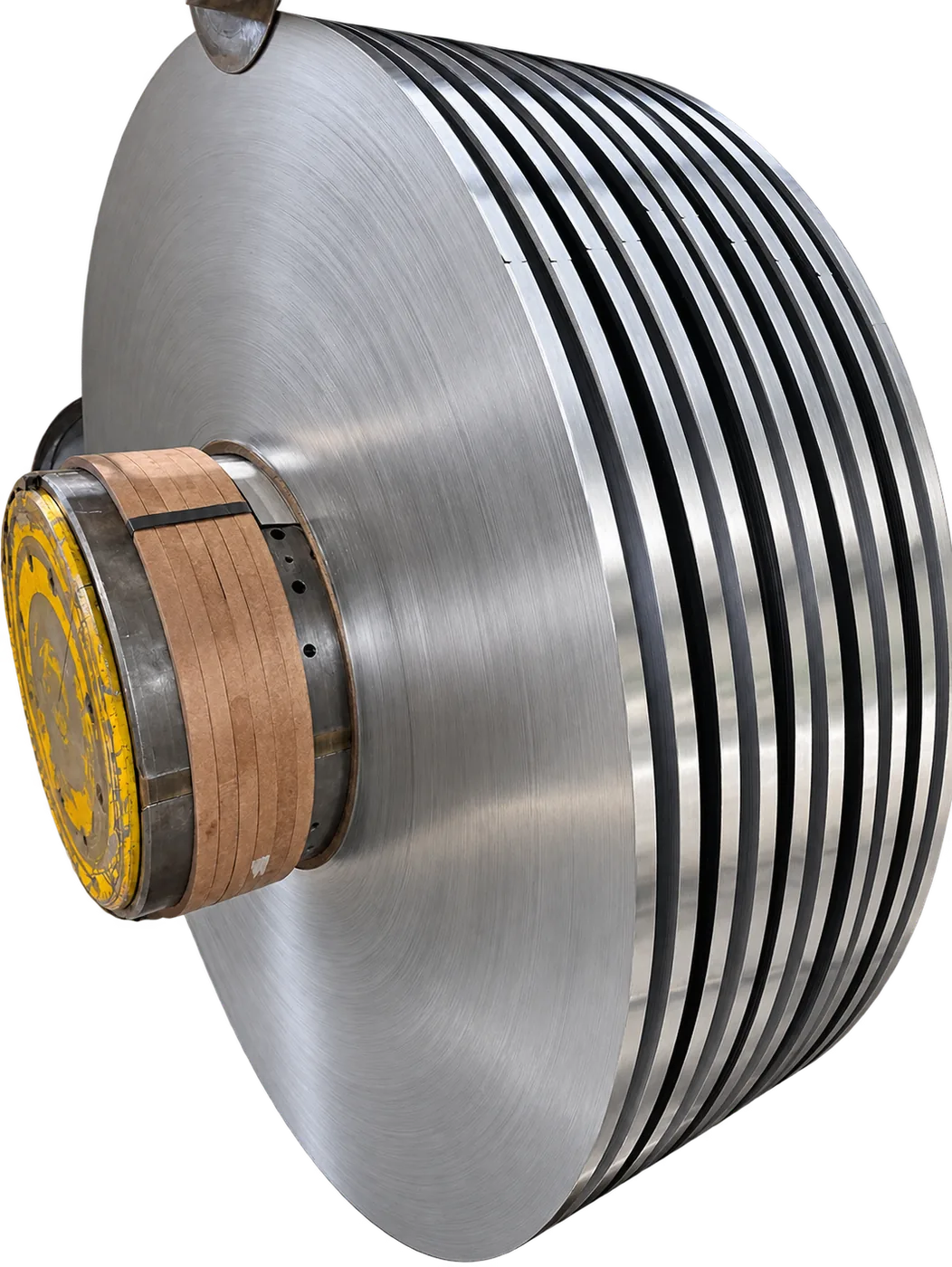
Description
AISI 316 (EN 1.4401, X5CrNiMo17-12-2) is a molybdenum-bearing austenitic stainless steel. The addition of about 2–2.5% Mo significantly improves resistance to pitting and crevice corrosion in chloride environments compared with AISI 304. It is suitable for marine environments, chemical and pharmaceutical processing, the food sector, equipment exposed to aggressive cleaning agents and components in contact with salts. As precision strip it combines good formability and weldability with superior corrosion resistance. 3S supplies AISI 316 annealed 2R/BA and, where strength and springiness are needed, work-hardened 2H, as strip, narrow strips from 3 mm, spools and sheets from 0.05 to 0.70 mm (annealed) and from 0.05 to 2.50 mm (work-hardened).
Properties
- Molybdenum for better chloride resistance
- Suitable for marine, chemical and food environments
- Available annealed 2R/BA or work-hardened 2H
- Good formability and weldability
Applications for this grade
Supply
| Parameter | Range | Notes |
|---|---|---|
| Thickness | Annealed 0.05 – 0.70 mm Work-hardened 0.05 – 2.50 mm | Other thicknesses on request |
| Width | 3 – 1250 mm | Slitting with sheared or deburred edges |
| Finishes | Annealed 2R / BA • Work‑hardened 2H | Calibrated mechanical properties |
| Formats | Strip • Narrow strips • Spools • Sheets | Sheets cut to size up to 1000 mm |
| Spools | From 15 kg to 1500 kg | ID 50–400 mm • traverse or parallel winding |
Tolerances according to EN ISO 9445 or customer specification. 3.1 certificates on request.
Frequently asked questions
Request a quoteWhat is the difference between AISI 316 and 316L?
Can AISI 316 be used for springs?
How can I get a quote?
Tell us the alloy, finish, thickness, width, edge and format (strip/narrow strip/spool) and we will send you a quick quotation.